Published: 24 July 2026 - 07:00 WIB - Views: 0 views
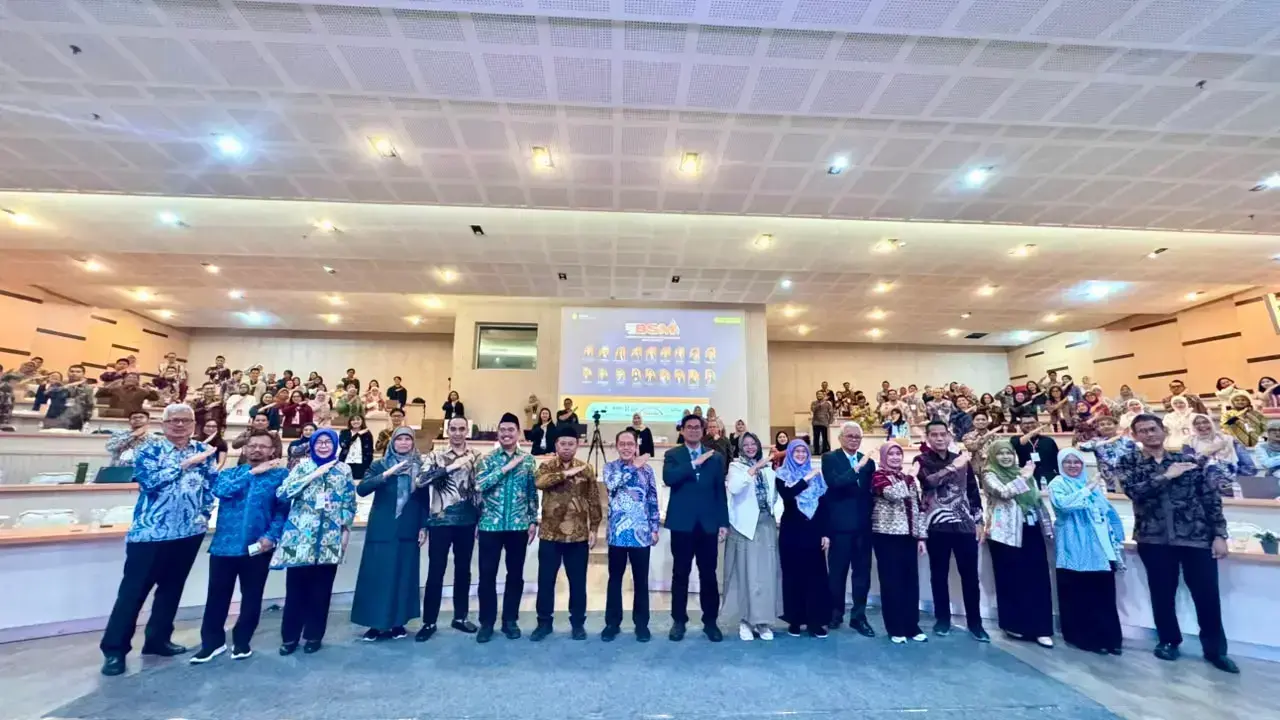
[unsoed.ac.id, Fri, 24/7/2026] Universitas Jenderal Soedirman (Unsoed), through its Faculty of Health Sciences (FIKes), hosted the Biennial Scientific Meeting (BSM) of the Indonesian Health Economics Association (InaHEA) 2026, held from July 23–26, 2026. The event took place on Friday (July 24, 2026) at the Integrated Laboratory of the Faculty of Economics and Business, Unsoed, bringing forward strategic issues on strengthening health economics as a foundation for transforming Indonesia’s health system.
The event was attended by the Head of the Banyumas District Health Office, the Head of the Purbalingga District Health Office, the Director of Prof. Dr. Margono Soekarjo Regional General Hospital, the Director of Banyumas Regional General Hospital, the Director of Ajibarang Regional General Hospital, representatives from BPJS Kesehatan Purwokerto Branch Office, the Rector of Unsoed along with the Vice Rectors, deans and vice deans, department heads within FIKes, and approximately 150 participants from various universities across Indonesia.
In his opening remarks, the Dean of FIKes Unsoed, Prof. Dr.sc.hum. Budi Aji, S.K.M., M.Sc., emphasized that hosting the InaHEA 2026 Biennial Scientific Meeting reflects FIKes Unsoed’s commitment to advancing knowledge that delivers tangible benefits to society. “Through this Biennial Scientific Meeting InaHEA 2026, FIKes Unsoed seeks to promote impactful health science at both local and national levels. This forum serves as a collaborative platform for around 150 participants from various universities to exchange knowledge, generate innovation, and strengthen the contribution of health economics in addressing societal challenges. In addition, this event is expected to create a multiplier effect on the regional economy,” he stated.
The Chairman of the Indonesian Health Economics Association (InaHEA), Prof. dr. Hasbullah Thabrany, MPH., DrPH, highlighted that strengthening the health system requires synergy among multiple stakeholders, including universities, government institutions, and healthcare providers. “Quality healthcare services must be supported by strong education. Universities, government, and healthcare providers must work together to build a stronger health system, improve service quality, and reinforce its economic foundation. Health economics has a reciprocal relationship with healthcare services, which enables continuous innovation,” he explained.
Meanwhile, the Rector of Unsoed, Prof. Dr. Ir. Akhmad Sodiq, M.Sc.Agr., IPU., ASEAN Eng., stressed that health economics plays an increasingly critical role in supporting national development. “Health economics has far-reaching implications for development. Transformation in the health sector, particularly in health economics, is an urgent necessity. I hope this forum can strengthen collaboration among universities and stakeholders, leading to policies that truly address the needs of society,” he remarked.
In the keynote session, the Head of the Health Development Policy Agency of the Indonesian Ministry of Health, Prof. Asnawi Abdullah, Ph.D., presented on the transformation of Indonesia’s health system through digital integration and the strengthening of primary healthcare services as the foundation for a more resilient system.
In another keynote session titled “From Data to Action: Strengthening Regional Health Systems through Digital Health Innovation,” the Head of the Purbalingga District Health Office, dr. Jusi Febrianto, MPH., explained that digital transformation must enable health data to be used as a basis for fast, accurate, and evidence-based decision-making. According to him, optimizing data utilization will strengthen planning, improve the quality of regional healthcare services, and produce more effective and targeted policies.
Over the four-day event, BSM InaHEA 2026 featured a series of scientific activities, including pre-conference workshops, keynote sessions, plenary sessions, special sessions, and oral presentations. Various strategic topics were discussed, such as primary healthcare transformation, health financing reform, strengthening the National Health Insurance (JKN), the use of digital data in health systems, pharmacoeconomics, Health Technology Assessment (HTA), health insurance development, and the application of artificial intelligence in healthcare services.
The organization of the InaHEA 2026 Biennial Scientific Meeting at Unsoed is expected to strengthen collaborative networks among universities, government institutions, healthcare providers, and professional organizations in generating innovations and policy recommendations to support the advancement of health economics. Ultimately, the transformation of Indonesia’s health system can be achieved through evidence-based, sustainable policies that deliver broader benefits to society.